
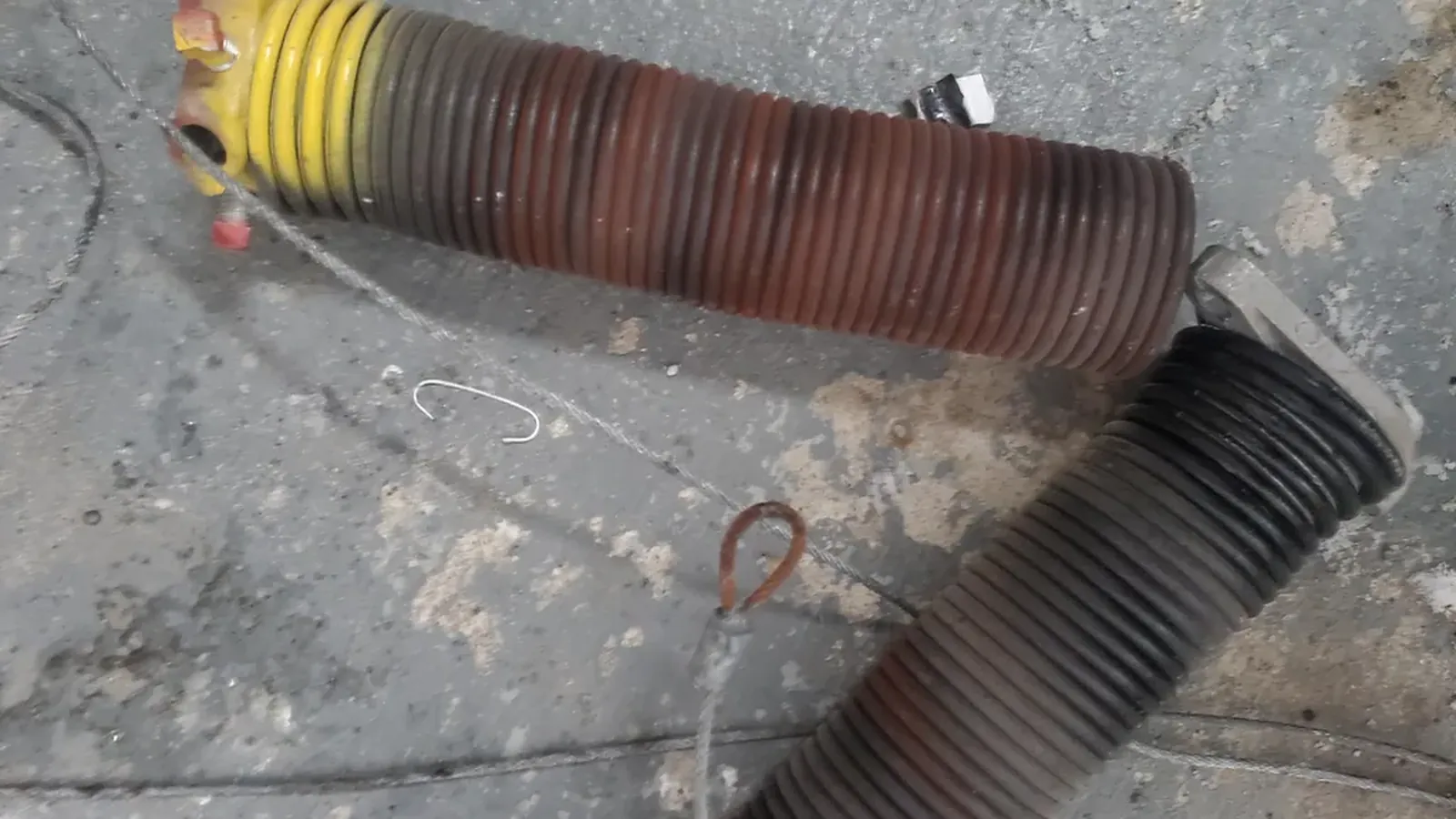
Most homeowners in Kanata never think about their garage door springs until the morning one breaks. The car is inside, the opener hums, the door lifts a few inches and stops. If that sounds familiar, this guide explains what happened, why it tends to happen in the cold months, and what a proper spring replacement looks like.
Springs are the part of the door that does the heavy lifting. A typical two-car steel door is far too heavy to lift by hand without them. The opener only guides the door up and down; the springs carry the weight. When a spring fails, everything else on the door is suddenly asked to do a job it was never built for.
Torsion springs and extension springs
Most garage doors we see in Kanata Lakes, Bridlewood, Morgan's Grant and Kanata North use torsion springs. These are the large coils mounted on a steel shaft just above the door opening. As the door closes, the springs wind up and store energy. As it opens, they unwind and lift the door through cables wrapped around drums at each end of the shaft.
Some older homes in Kanata still have extension springs. These stretch along the horizontal tracks on each side of the ceiling. They should always have a safety cable running through the middle, so a broken spring cannot whip across the garage.
Both types wear out. Each time the door opens and closes, the steel flexes. Standard springs are commonly rated for around 10,000 cycles, so a busy household that uses the garage as its front door can reach that point in well under ten years.
Signs your garage door spring is broken
- A loud bang from the garage, often when nobody is touching the door
- A visible gap of a few centimetres in one of the torsion coils above the door
- The door feels extremely heavy, or it drops quickly when you let go of it
- The opener hums or clicks, lifts the door a short distance, then stops or reverses
- The door goes up crooked, or a cable hangs loose beside the track
- An extension spring that is hanging slack or stretched far longer than the other
If you see any of these, stop using the opener. Running it against a broken spring can strip the opener's drive gear, bend the top panel or pull a cable off its drum. Leave the door where it is and call 343-777-8893.
Why springs break in an Ottawa winter
Broken springs are more common once the temperature drops, and there are practical reasons for it. Cold steel is less forgiving, so a coil that is already near the end of its life is more likely to crack on a frosty morning. Doors also get heavier in winter: snow and ice build up on the bottom panel, and a door frozen to the floor puts a sudden extra load on the springs when the opener tries to pull it free.
Road salt and slush tracked into the garage add to the problem. Moisture and salt speed up rust on the coils, and rust creates weak spots where the steel eventually snaps. A spring that has a light coating of rust and squeaks or binds as the door moves is worth having looked at before the coldest weeks arrive.
Winter is not the only cause. Springs that were the wrong size for the door, or that were never balanced properly, wear out early in any season. Our garage door maintenance tips for Kanata homes include a simple balance test you can do to check for that.
Why spring replacement is not a DIY job
There are plenty of online videos showing people winding torsion springs in their own garage. We still recommend against it. A wound torsion spring stores enough energy to lift a heavy door, and that energy is released all at once if a winding bar slips or the wrong set screw is loosened. Serious hand, arm and face injuries happen this way every year.
Extension springs carry the same risk in a different form. Without a safety cable, a spring that breaks under tension can fly across the garage and into a car or a person.
There is also the question of getting it right. Springs are matched to the door's weight, height and drum size. A spring that is close but not correct leaves the door unbalanced, which shortens the life of the new spring and of the opener. A trained technician measures the old spring, confirms the door weight and sets the tension properly.
What you can safely do: keep people and pets clear of the door, unplug or switch off the opener, and do not try to lift the door by hand if it feels heavy. If the door is stuck open and you need to secure the house overnight, our emergency garage door repair service runs 24/7 across Kanata and the west end.
What a spring repair visit involves
When you book garage door spring repair with us, the visit follows the same steps every time:
- Inspection. The technician looks at both springs, the cables, the drums, the bearings and the bottom brackets. A broken spring often damages a cable, so everything that works with the spring is checked.
- Quote before work. You hear what failed and what it will take to fix, and you approve the quote before any spring is touched.
- Safe removal. The old spring is unwound with proper winding bars and taken off the shaft.
- Correctly sized replacement. The new spring is matched to your door. On a door with two springs, we usually recommend replacing both so the door stays balanced and the second spring does not fail a few weeks later.
- Balance and adjustment. The springs are wound to the right tension, the cables are seated on the drums, and the door is balanced so it stays put when lifted halfway by hand.
- Testing. The opener is reconnected and tested, including the safety reverse and the photo-eye sensors.
Most spring replacements are finished in a single visit, and same-day service is the normal booking across Kanata, Stittsville and the nearby west end. The work is insured and WSIB covered, and spring repairs come with a 3-year warranty.
One spring or both?
If your door has two torsion springs and only one has snapped, it is tempting to replace just the broken one. The catch is that both springs have done exactly the same number of cycles. The one still on the shaft is usually close behind, and a new spring paired with a worn one leaves the door slightly out of balance. Replacing the pair keeps the door even and saves a second visit. We will show you the condition of the remaining spring so you can decide.
After the repair
A new spring should make the door feel light and smooth again. To get the most out of it, keep the coils lightly lubricated, keep an eye on the cables, and listen for new noises. If the opener struggled for a while against the broken spring, it is worth watching for slow movement or grinding; our post on garage door opener troubleshooting covers the common symptoms.
If you think a spring has broken, call 343-777-8893. We will tell you what to expect and get a technician to you, usually the same day.

