
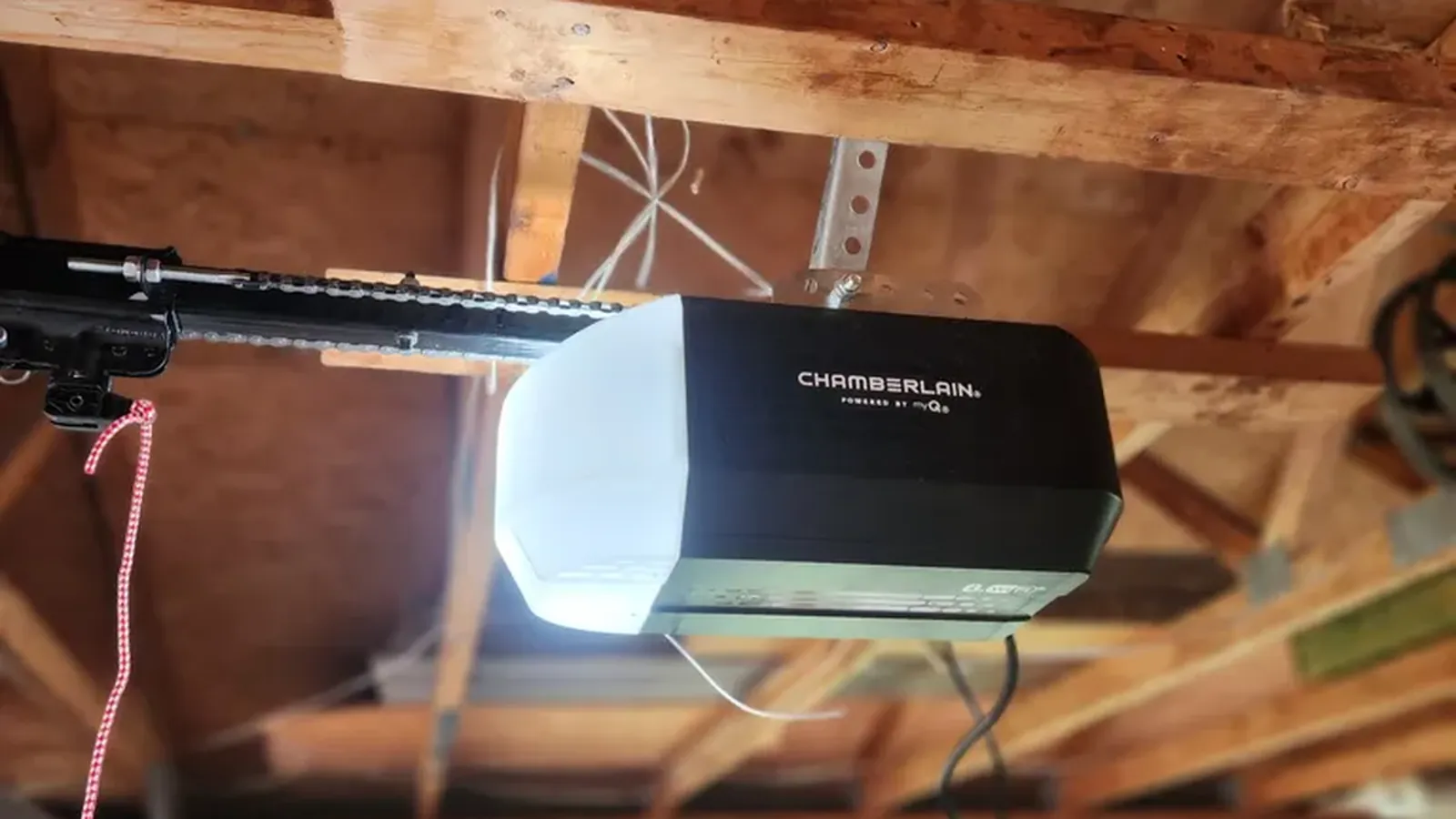
A garage door opener that stops working always seems to pick the worst moment: a cold January morning, a late drive home from work, a day with groceries in the trunk. The good news is that many opener problems have a simple cause you can check yourself in a few minutes. Others point to a worn part or to a problem with the door itself, and those need a technician.
This guide walks through the most common opener problems we see in Kanata, Kanata Lakes, Bridlewood and the rest of the west end, in the order we would check them.
Before you start: is it the opener or the door?
An opener is designed to guide a balanced door, not to lift dead weight. If a spring or cable has failed, the opener will hum, strain or reverse because the door is far too heavy. So the first question is always whether the door itself is healthy.
Look at the springs above the door. If you see a gap in a coil, a loose cable, or the door sitting crooked, stop here. Do not keep pressing the button. That is a spring repair or cable repair job, and running the opener against it can damage the opener too.
1. The door starts to close, then reverses
This is the most common opener call, and the usual cause is the safety sensors. These are the two small photo-eyes mounted near the floor on each side of the door. If the beam between them is blocked or the sensors are out of line, the opener refuses to close the door.
- Look for anything in the path of the beam: a recycling bin, a shovel, a bike tire, leaves or snow.
- Wipe both lenses with a soft cloth. Dust, cobwebs and road spray are enough to block the beam.
- Check the indicator lights on each sensor. On most openers, a steady light means the sensors can see each other, and a blinking or dark light means they cannot.
- If a sensor has been bumped, gently adjust it until both lights are steady again.
- Look along the wires for staples through the cable or damage from a snow shovel or a car bumper.
Low winter sun can also shine straight into a sensor and confuse it, which is why some doors misbehave only at certain times of day. If the door reverses with nothing in the way and the sensors look fine, the close force setting or the door's balance may be off, and that is worth a professional look.
2. The remote does nothing, but the wall button works
If the door works from the wall button, the opener itself is fine and the problem is the remote or its connection to the opener.
- Replace the remote battery first. Cold weather drains small batteries faster.
- Try a second remote, or the keypad outside, to see if only one remote is affected.
- Check whether the lock feature is on (see the next section).
- Reprogram the remote using the learn button on the opener's motor unit, following the instructions in your opener's manual.
If no remote works and reprogramming fails, the opener's receiver or logic board may be at fault. That is something we diagnose during an opener repair visit.
3. The lock or vacation mode is switched on
Many wall controls have a lock or vacation button that disables the remotes while you are away. It is easy to press by accident when reaching for the light button. If the remotes and keypad suddenly stop working while the wall button still opens the door, look for a lock symbol or a blinking light on the wall control and switch the lock off. Your opener's manual will show exactly which button controls it.
4. Nothing happens at all
- Check that the opener is plugged in and that the outlet has power. Plug in a lamp to test it.
- Check the breaker panel, and any GFCI outlet in the garage that may have tripped.
- After a power outage, some openers need a minute to reset. A few may need the remotes reprogrammed.
- Make sure the door is not disconnected. If the emergency release cord was pulled, the trolley is off the drive and the motor will run without moving the door.
If the opener has power but makes no sound and shows no lights, the logic board or wall control wiring may have failed.
5. The motor hums or runs, but the door does not move
A motor that runs without moving the door usually means one of three things: the door is disconnected from the trolley, the drive gear inside the opener has worn out, or the door is too heavy because of a broken spring. On many chain and belt openers the main drive gear is plastic, and over years of use its teeth wear down until the motor spins without catching. You may hear grinding or see plastic shavings under the unit.
A worn gear can often be replaced, which is a common repair on openers that are otherwise in good shape.
6. Chain or belt problems
On a chain-drive opener, a chain that sags well below the rail, slaps loudly, or jumps on the sprocket needs adjustment. A belt-drive opener that slips or squeals may have a stretched belt or a worn pulley. Do not over-tighten either one; too much tension wears out the motor bearings and the gear. If the chain or belt keeps coming off, have it inspected rather than refitting it again and again.
7. The door is frozen to the floor
This one is common in Ottawa after a thaw followed by a hard freeze. The bottom seal freezes to the concrete, and the opener either strains or reverses. Do not keep pressing the button, and do not chip at the seal with a sharp tool. Free the seal gently with a plastic scraper or warm water, then dry the area so it does not refreeze. Keeping the floor clear of slush and ice under the door helps prevent it.
When to repair and when to replace
Many openers are worth repairing. Sensors, remotes, wall controls, gears and logic boards can usually be fixed or replaced for much less than a new unit. Repair makes sense when the opener is reasonably modern, runs smoothly once fixed, and the motor is sound.
Replacement starts to make sense when:
- The opener is old, noisy and has needed several repairs in a short time
- Parts for your model are no longer available
- It lacks the photo-eye safety sensors and auto-reverse that current openers have
- You want a quieter belt drive under a bedroom, or Wi-Fi control from your phone
Our garage door opener installation page explains the chain, belt and Wi-Fi options we install. We will always tell you honestly whether a repair is worth it.
Safety notes
Unplug the opener before touching anything near the rail or motor. Never stand or walk under a moving door, and keep remotes out of reach of small children. If the door is open and will not close at night, see our emergency garage door repair service, which runs 24/7. For everything else, you can send us a request or call 343-777-8893.
Regular care also prevents many opener problems. Our maintenance tips for Kanata homes include a monthly sensor and reverse test, and our spring replacement guide covers the spring problems that often look like opener trouble.

