
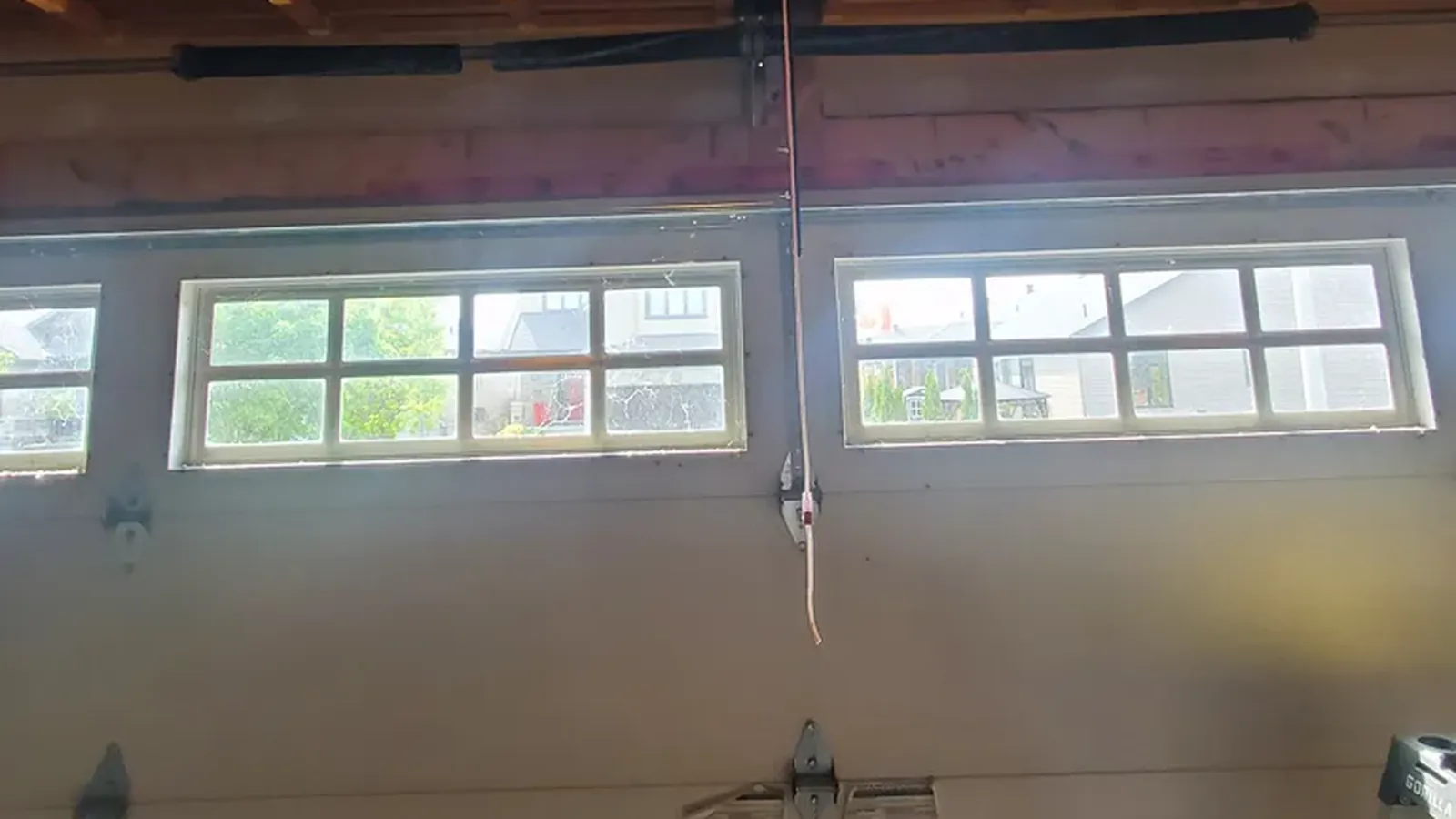
A garage door is the largest moving part of most houses, and in Kanata it works hard. It opens and closes several times a day, sits through freeze-thaw cycles, and gets sprayed with salt and slush all winter. A little regular care keeps it quiet, extends the life of the springs and opener, and helps you catch small problems before they turn into a door that will not open.
None of the steps below require special tools. They are safe for homeowners as long as you stay away from the springs, cables and bottom brackets, which are under high tension. If a check points to a problem with those parts, leave the repair to a technician.
A seasonal checklist for Kanata homes
We suggest two main check-ups a year: one in the fall before the first hard frost, and one in the spring once the salt and slush are gone. A quick monthly safety test fills the gap in between.
Fall: get ready for winter
- Lubricate the moving parts (see below) so they do not stiffen in the cold.
- Inspect the bottom seal and the side and top weatherstripping, and replace anything cracked or flattened.
- Run the balance test and the safety reverse test.
- Replace the batteries in your remotes and outdoor keypad.
- Clear leaves and debris from the tracks and from the floor where the door closes.
Spring: recover from winter
- Wash salt and grime off the bottom panel and the lower part of the tracks.
- Look closely at the bottom brackets and the lower ends of the cables for rust.
- Check the bottom seal for tears from ice and shovels.
- Lubricate again after the wet season.
- Listen for new noises as the door runs through a full cycle.
Monthly: a two-minute safety check
- Watch the door open and close. It should move smoothly and evenly on both sides.
- Wave an object through the sensor beam while the door is closing. The door should stop and reverse.
- Glance at the springs and cables for gaps, fraying or loose strands.
Lubrication: what to oil and what to leave alone
Most noisy doors in Kanata just need lubrication. Use a spray lubricant made for garage doors, such as a silicone or white lithium product. General-purpose penetrating sprays are good for loosening things but do not leave much protection behind.
- Hinges: a short spray on each pivot point.
- Rollers: the bearings on steel rollers. Nylon rollers with sealed bearings need little or none.
- Torsion springs: a light coat along the coils reduces friction and helps keep rust away. Spray from a safe distance and do not touch or adjust the spring.
- Bearings: the end bearing plates on the spring shaft.
- Opener rail: on chain-drive openers, follow the manual. Belt drives usually need no lubricant.
Do not grease the tracks. Grease collects dirt and grit and can make rollers skid instead of roll. Wipe the tracks clean with a dry cloth instead. Wipe off any extra lubricant so it does not drip on the car or the floor.
The balance test
A balanced door is the single best sign that the springs are doing their job. An unbalanced door wears out the opener and the springs faster.
- Close the door.
- Pull the emergency release cord to disconnect the door from the opener.
- Lift the door by hand to about halfway and let go carefully.
- A balanced door stays roughly where you left it. If it drops, or rises on its own, the spring tension is off.
- Close the door and reconnect the opener by running it, or by reattaching the trolley as your manual describes.
If the door is very heavy, stop the test and do not force it. That is a sign of a weak or broken spring. Do not try to adjust spring tension yourself; it needs proper winding bars and training. Book a spring repair visit instead, and see our spring replacement guide for what to expect.
The safety reverse test
Every modern opener has two safety features: photo-eye sensors near the floor, and an auto-reverse that triggers when the door meets resistance. Test both once a month.
- Sensors: close the door and pass a broom handle through the beam. The door should stop and reverse.
- Auto-reverse: lay a piece of wood flat on the floor in the door's path. When the door touches it, the door should reverse.
If either test fails, stop using the opener until it is checked. Our opener troubleshooting guide explains the common causes, and our opener repair service can adjust or replace the parts.
Weatherstripping and the bottom seal
In an Ottawa winter, the seals around the door decide how cold the garage gets and how much snow blows in. Check three places:
- Bottom seal: the rubber strip along the bottom panel. It should touch the floor along the whole width with no daylight showing. Cracked, torn or flattened seals can be replaced in the retainer.
- Side and top seals: the flexible strip on the frame around the door. It should press lightly against the door when closed.
- Between panels: some insulated doors have seals between sections. Look for gaps that let light through.
Good seals also help stop the door from freezing to the floor. After a thaw, clear slush from under the door before the temperature drops again.
Parts to look at but not touch
Some parts are worth inspecting regularly but should only be repaired by a professional:
- Cables: look for frayed strands, rust or a cable that sits loose on its drum.
- Bottom brackets: the brackets at the bottom corners of the door hold the cables and are under spring tension. Rust here is common in homes that park salty cars inside.
- Springs: a gap in a coil means the spring has broken.
- Tracks: look for dents or bends that make rollers catch.
If you find any of these, call for a cable repair or spring check. Do not loosen bolts on the bottom brackets yourself.
When to call a technician
Call us if the door is unbalanced, makes grinding or scraping noises, moves unevenly, fails the reverse test, or has rusted brackets or frayed cables. If the door is stuck open or off its track, our emergency service runs 24/7 across Kanata, Stittsville and the west end. For anything else, send us a request or call 343-777-8893.

